Thursday, January 27, 2011

Abeille's Oriole

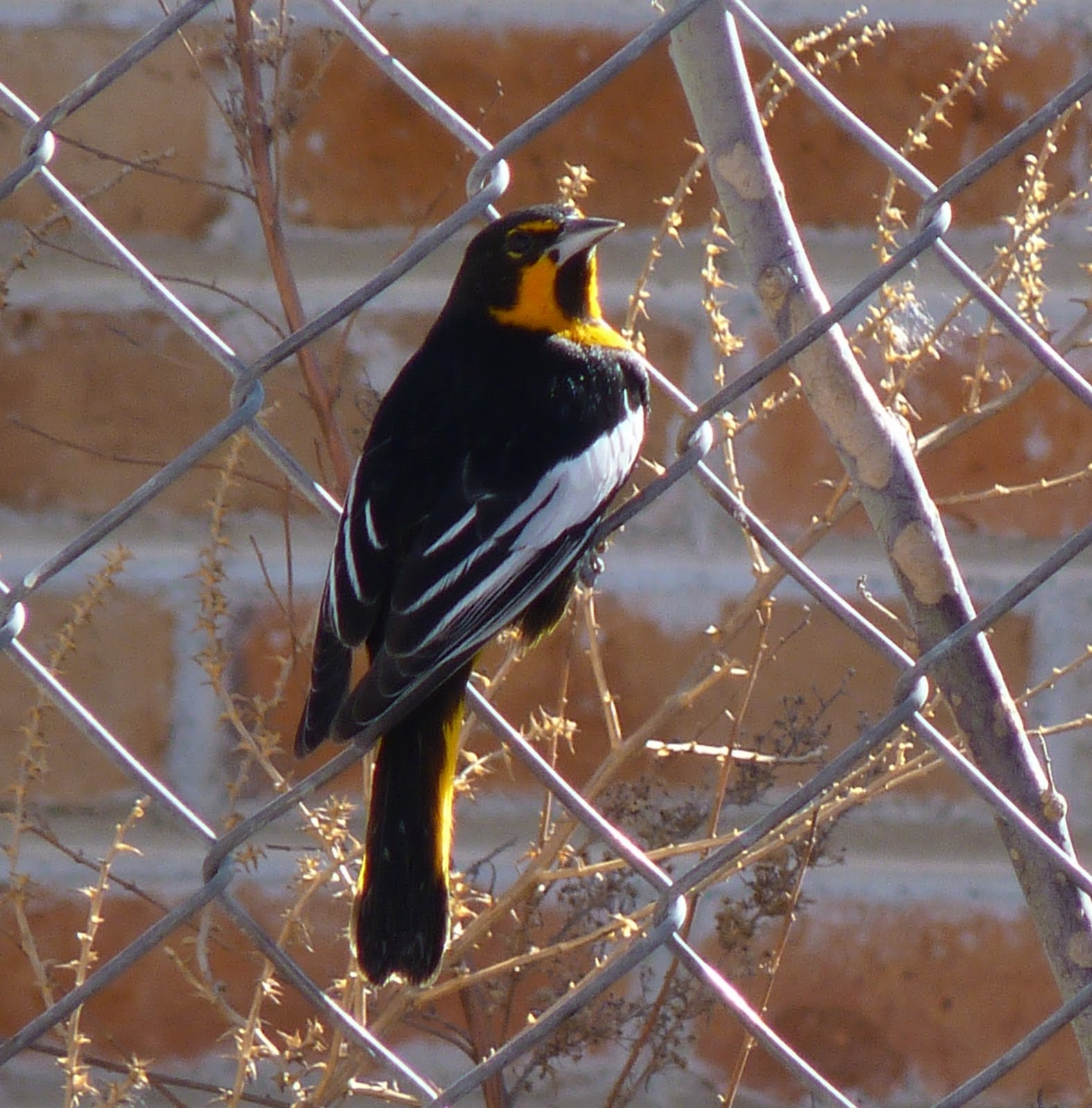
This Oriole has started to visit my feeding station. It was formerly lumped in with Bullock's Oriole (as in Howell and Webb), but has actually recently been split from this species.

Now known as Abeille's Oriole or Black-backed Oriole, this species is endemic to central Mexico. What a bonus to have another endemic visiting my garden on a regular basis.


Monday, January 24, 2011

Images


Violet-crowned Hummingbird


House Finch


Broad-billed Hummingbird


Yellow-rumped (Audubon's) Warbler

Sunday, January 23, 2011

Red-tailed Hawk

Had a brief walk around La Presa this morning to see if anything was about and, as usual, it came up trumps.

Seven species of Duck included: Shoveler (in ridiculous numbers >10000), Ruddy Duck (1000+), Pintail (300), Green-winged Teal, Blue-winged Teal, Mexican Duck (100) and best of all a drake Ring-necked Duck loafing around, a new bird for my Mexico list.

Also a LOT of Eared Grebes and American Coots. Waders included Lesser and Greater Yellowlegs, Black-necked Stilt, Spotted Sandpiper, Least Sandpipers (4) and several Killdeer.

Perhaps the highlight of the day was seeing a Red-tailed Hawk feasting on a dead Coot before heading into some nearby trees. Here's some shots of it.


Other birds of note:
American White Pelican (soaring flocks of 6 and 4)
Scott's Oriole (4 by La Palapa)
Black Phoebe (2 at dam)
Barn Swallow (20 - the biggest concentration since the birds departed. Guess they're on their way back)

Friday, January 21, 2011

More from the garden


This female Varied Bunting paid a visit to my hummingbird feeder. She's a pretty dull individual, especially compared to the colourful males of this species.


Meanwhile, the Inca Doves have been attracted to the seed and biscuits that I have been throwing down on the patio.


I recently ran out of hummingbird nectar so made some myself. Boil up some water, let it cool and then add sugar (1 part sugar to 4 parts water). Cheap and works a treat, as this Violet-crowned Hummer will verify!

Saturday, January 15, 2011

Garden Birdwatch

I've found a place to work this afternoon in my house which overlooks a lot of the garden, including the Hummingbird feeder I put up yesterday. It's really shown the value of 'arsing', i.e. sitting in one place for an extended period.

Before long, this Broad-billed Hummer was enjoying a nectar treat.


Before long, a Violet-crowned was getting a bit of the action as well.


Even a Hooded Oriole swooped down on to the fence and had a quick drink.


Elsewhere in the garden were the usual House Finches, House Sparrows and Lincoln's Sparrows, as well as Bullock's Oriole, Vermilion Flycatcher, Cactus Wren, Orange-crowned Warbler, Yellow-rumped Warbler (pictured) and 2 overflying Chihuahuan Ravens.


Daylist and Details 15th January 2011


American White Pelican - 250 Lago Pelicanos
Great Blue Heron - 2 Lago Pelicanos
Snowy Egret
Great Egret - 2 L.P.
Cattle Egret
White-faced Ibis - flocks of up to 600
Gadwall - VICTORIA bordo
Green-winged Teal - 30 L.P.
American Wigeon - 6 L.P.
Northern Shoveler
Mexican Duck - 2 L.P.
Ruddy Duck - 10 L.P.
American Coot
American Kestrel - common
Peregrine - 1
Red-tailed Hawk
Black-shouldered Kite - pair L.P.
Turkey Vulture
Crested Caracara - 12 L.P.
Lesser Yellowlegs - 4
Spotted Sandpiper
Killdeer
Violet-crowned Hummingbird - garden
Broad-billed Hummingbird - garden
Golden-fronted Woodpecker
Common Ground Dove - 6 Farmland
Mourning Dove
White-winged Dove
Inca Dove
Feral Pigeon
Black-and-white Warbler - L.P.
Wilson's Warbler - L.P.
Audubon's Warbler
Orange-crowned Warbler
Common Yellowthroat
Ruby-crowned Kinglet
Brewer's Blackbird
Red-winged Blackbird
Yellow-headed Blackbird
Brown-headed Cowbird
Bronzed Cowbird
Great-tailed Grackle
Bullock's Oriole
House Sparrow
Vesper Sparrow
Lincoln's Sparrow
Lark Sparrow
Clay-coloured Sparrow
Savannah Sparrow
Eastern Meadowlark - 5 L.P.
Grey Flycatcher
Vermilion Flycatcher
Say's Phoebe
Cassin's Kingbird
Loggerhead Shrike
House Finch
Blue Grosbeak
Canyon Towhee
Blue-Grey Gnatcatcher
Curve-billed Thrasher
Chihuahuan Raven - 2 over Tequis.
Northern Mockingbird
American Pipit - L.P.
Cactus Wren - Garden
Hooded Oriole - 2 Garden

66s.p.

Pelicanos

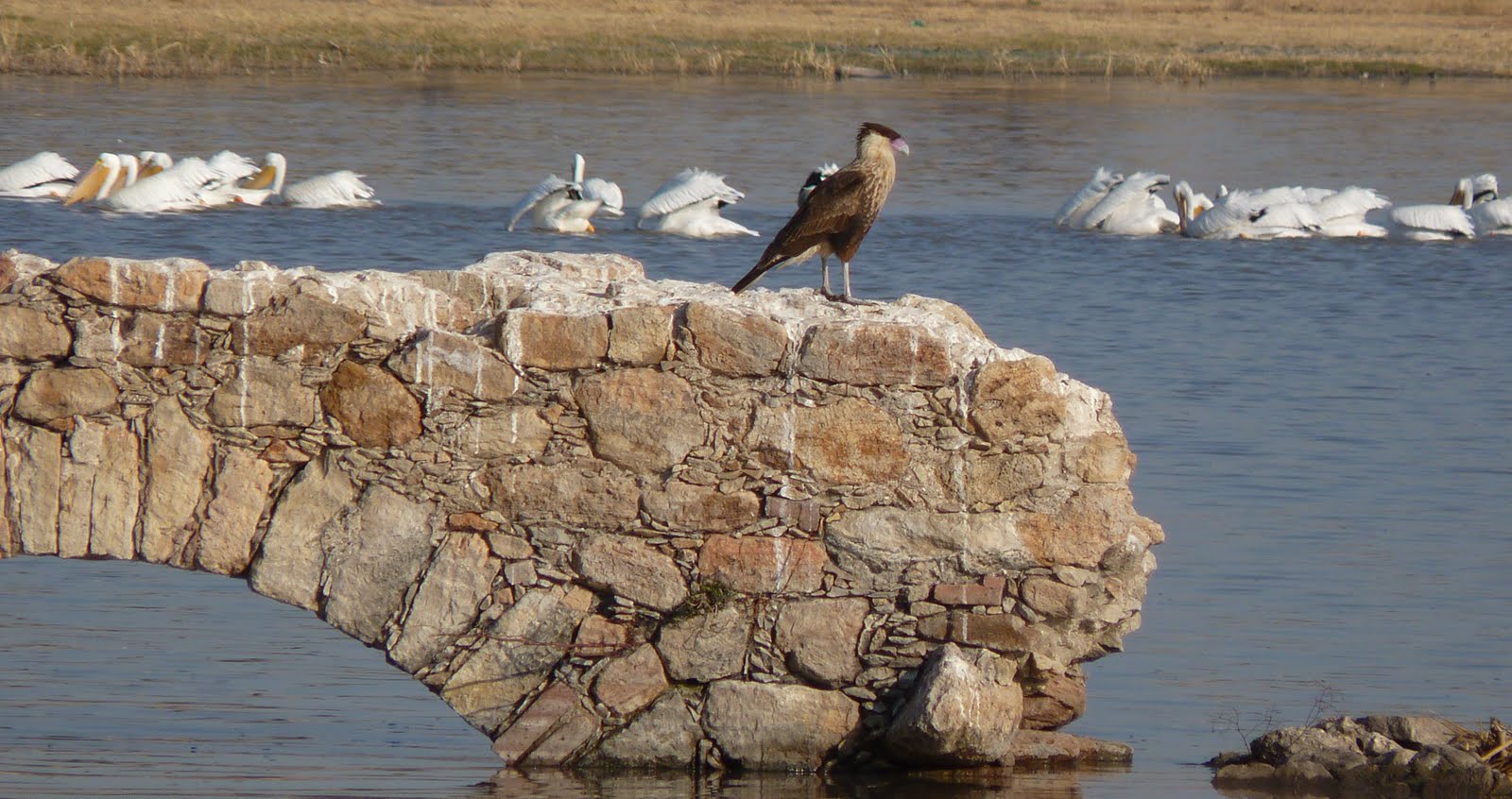
The Caracaras mentioned in the last post were found on the edge of a small lake that I discovered, purely by chance. I'd spied the lake from a few hundred metres away, and assumed the white blobs on it were merely Egrets - fine birds, but nothing to get excited about.

Closer inspection revealed that there were Egrets (Great, Snowy and Cattle) around the lake, but the blobs I had seen were in fact a huge raft of American White Pelicans. They winter in Mexico, but I had never expected to see so many within a bike ride from home. (Co-ordinates
20.560374,-99.95121)


American White Pelicans - Tequisquiapan

White Pelicans fish in large groups, dipping their huge beaks into shoals of fish. I watched them for a bit, as soon as 1 group found a school and started 'fishing', the rest of the birds on the lake realised something was happening and flew in to join them.

This rich body of water held some other water birds as well. American Coots, 30 Green-winged Teal, 8 Northern Shoveler, 6 Ruddy Duck and a nice group of American Wigeon.


I walked around the edge of the lake and was lucky enough to find a mixed flock of American Wood Warblers. It contained a few Yellow-rumped Warblers, 1 Wilson's Warbler, 2 Orange-crowned Warblers, 1 Black-and-White Warbler (the first I've seen away from the coast) and, best of all, 1 Common Yellowthroat (lifer).

Orange-crowned Warbler

Also perched up in the early morning Sun were a few Eastern Meadowlarks, another long overdue lifer in these parts.


Other interesting birds around the lake included Great Blue Heron (2), White-faced Ibis (flocks numbering up to 600), Common Ground Dove, Grey Flycatcher, Say's Phoebe, Loggerhead Shrikes, Spotted Sandpiper, Lesser Yellowlegs (4) and Killdeer (3).

More to come on a superb day.


Birding and Surveying

I was out counting Grackles and Cowbirds this morning. After stumbling upon some great sites, though, a simple survey turned into a huge birding session.

Great-tailed Grackles and Bronzed Cowbirds fly from their plaza roost to their feeding grounds shortly after dawn. Red-winged Blackbirds, Brewer's Blackbirds, Yellow-headed Blackbirds and Brown-headed Cowbirds, all from the same family, can also be seen forming mixed flocks and feasting in the fields.

Mixed flock of Yellow-headed Blackbirds and Brown-headed Cowbirds

Less conspicuous, but present in similarly large numbers are a collection of winter sparrows. Clay-coloured in the biggest numbers, followed by Lark Sparrows, Vesper, Lincoln, Savannah and Chipping.

Clay-coloured Sparrow

The abundance of passerines and other food sources in the agricultural land west and north of Tequis. results in fantastic opportunities for birds of prey. This morning I had 12 American Kestrels, 1 Peregrine, 2 Red-tailed Hawks and 3 Black-shouldered Kites, not to mention a ridiculous number of these boys..


Crested Caracaras

In one recently ploughed field I had no less than 10 Caracaras. These resourceful birds will eat anything - insects, reptiles, small birds, fish. Later on in the morning, I had one feasting on a dead cow.


BUBO Listing www.bubo.org