Saturday, December 25, 2010

Mexico to London

Within a day of me flying into London for my Christmas break, the Hiley brothers headed off to Balham to catch up with an iconic winter visitor - the Waxwing.

There's a chance I'll get Cedar Waxwings in Mexico this winter. These are a different species, but from the same family.

Here's a series of photos taken by Xander.


Wednesday, December 22, 2010

Birding and Pyramiding


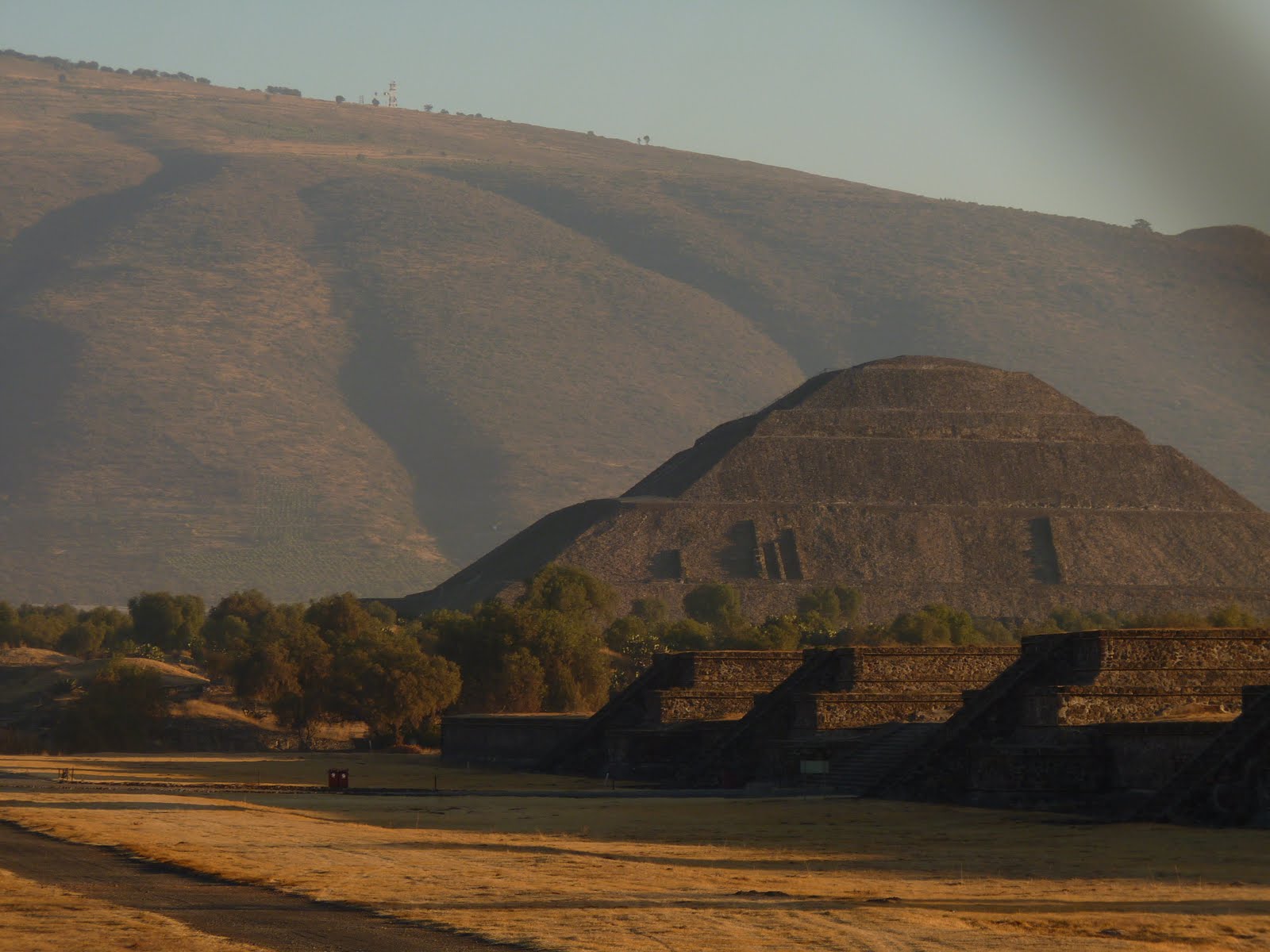
Been spending the day at the Teotihuican Pyramids today prior to flying out. Our hotel (Villas Arqueologicas) has some pretty nice gardens, so, needless to say, I had an explore at first light.

Some pishing brought me a nice selection of American Warblers - Yellow Rumped (Audubon's) by the dozen, 4 Wilson's Warblers, an Orange-crowned and a fine Townsend's. A Ruby-crowned Kinglet was also knocking around.

A few Curve-billed Thrashers thrashed on the lawn, and higher up in the trees I had Cassin's Kingbirds and a nice flock of Rufous-backed Robins.

I couldn't resist snapping some Inca Doves.


Or this cheeky Bewick's Wren - one of 2 scuttling mouse-like along the tree trunks.


A Hammond's Flycatcher high up in the conifer provided me with another Empidomax headache, but that was soothed by good views of Mexican Ladder-backed Woodpecker and Bullock's Oriole.

There wasn't a lot of bird activity around the pyramids themselves. Lark, House, Clay-coloured and Chipping Sparrows took some picking out in the long grass. Much more obliging were the numerous Canyon Towhees..


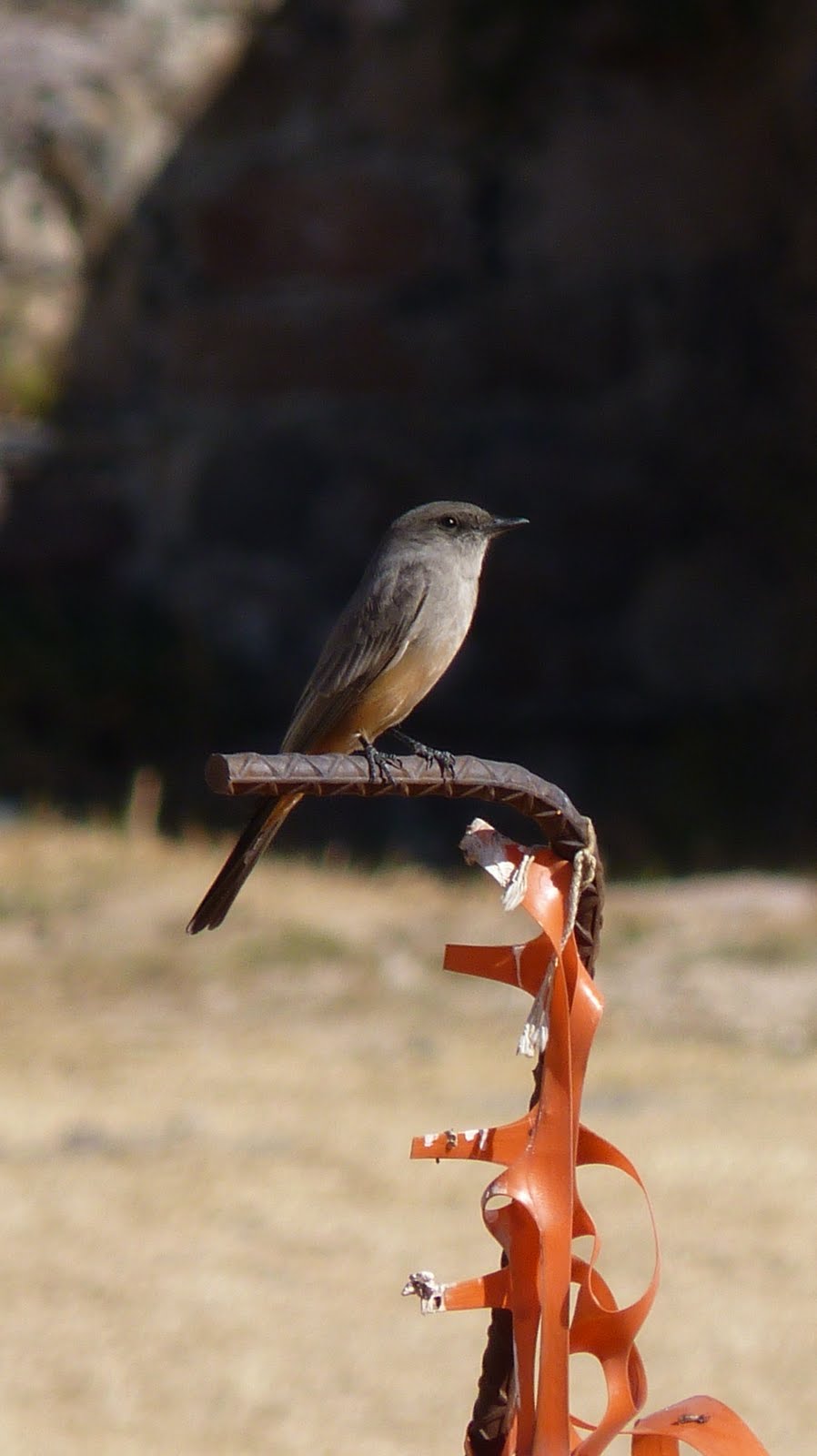
And this Say's Phoebe:


My last day's birding in Mexico before a little Christmas break in England. Future blog posts are set to include:

26th December - Wirral Boxing Day Bonanza
27th December - Peak District Bash
1st January - The Big Day
4th - 6th January - BENELUX

Returning to Mexico on the 7th January for more lifers and banter..


Monday, December 20, 2010

Bits and Pieces

On a return to the 'Hidden Gem' (small Bordo mentioned in an earlier post) , the flock of Long-billed Dowitchers had increased to 24. Also present were 9 Least Sandpipers, 6 Spotted Sandpipers and 12 Black-necked Stilts.


46 Cattle Egrets fed, and on the water were 5 Shovelers. I locked onto 3 more Grey Flycatchers and a Ruby-crowned Kinglet among the commoner birds (Blue Grosbeaks, Verm Flycatchers, Kingbirds, Loggerhead Shrikes, Clay-coloured and Lark Sparrows).

4 Turkey Vultures were over Tequis yesterday, the most I've seen this year.


Today, I had another Empid. species by the Rio San Juan. I'm leaning towards Cordilleran but am awaiting feedback from more experienced sources.


Tequis from Above

We got a different perspective on Tequisquiapan yesterday - a bird's eye view if you like. Though I wasn't initially keen on the idea of floating in a basket thousands of feet up, being in a hot air balloon was a serene experience, and allowed me to take some nice photos of the town and surrounds.


Here's a nice overall picture of Tequis - La Presa is at the top left.

Below is my workplace - Institue Bilingue Victoria


Here's the Plaza (centre) and Parque La Pila (bottom).


Ballooning at dawn...


Thursday, December 16, 2010

Hidden Gem

While out with the running club today, I stumbled across a hidden little lake, east of Tequisquiapan, and just a 5 minute run away from school.


Returned with the telescope to see what was about, and I wasn't disappointed. 14 Long-billed Dowitchers probed the shallows, and there were 6 Black-necked Stilts as well.


I used the cows as a hide...


And it did the trick. Closer scanning of the wader scrapes turned up a Lesser Yellowlegs, 4 Spotted Sandpipers and 2 Least Sandpipers. An Egret flock contained 20 Cattles, 1 Snowy and 1 Great White, and there were 3 Shovelers and a Ruddy Duck on the water itself.

There were plenty of Blue Grosbeaks, a bird rare in other parts of town, and typically high numbers of Vermilion Flycatchers, Loggerhead Shrikes and Kingbirds. It was one particular critter that caught my attention, though. I was into an Empidomax Flycatcher sp., from a family of birds that are difficult to tell apart. Luckily, I was able to fire off a few record shots..


Certain features - long flat bill, yellow lower mandible, the habitat, and the way it downward tail flicked allowed me to confirm that it was a Gray Flycatcher. Not the most colourful, but they all count.


Sunday, December 12, 2010

Presa Centenario Tequisquiapan - Winter Wildfowl Wonderland

I had a fantastic morning of what I would describe as 'classic' reservoir birding - seeing a fine mixture of waterbirds, shorebirds, raptors and scrub critters. It was probably going to be the last chance to bird the reservoir before my Christmas break, so I ambitiously aimed to cycle the entire way round.

Things started off very interestingly. I headed around the eastern side of the reservoir, and immediately noted a swathe of birds feeding in the exposed mud and shallow reedy patches close to the dam. American Coots and Eared Grebes were to be expected, as were Spotted Sandpipers and Kildeers. A group of 4 Long-billed Dowitchers, though, were a new Mexican tick for me.

Here's 'Ian Dowie' in action:


While this Kildeer piped away nearby:


It was nice to add a new wader to my 'reservoir' list which already includes: Semipalmated Plover, Western Sandpiper, Baird's Sandpiper, Least Sandpiper, Stilt Sandpiper, Lesser Yellowlegs, Greater Yellowlegs, Kildeer, Black-necked Stilt, American Avocet, Snipe, Spotted Sandpiper, Wilson's Phalarope and Willet.

The Ducks are another of my favourite families, and, again, La Presa hasn't disappointed. Before today, I had seen Shoveler's (several thousand), Mexican Duck, Ruddy Duck, Pintail, Green-winged Teal, Blue-winged Teal and Fulvous-Whistling Duck here.

Straight away, I was into 2 of these species...

Better was to come. Halfway around the reservoir, I spotted 3 duck in a sheltered bay. The distinctive head shape gave the game away - these were Canvasbacks allright.


Prolonged scanning of the big Shoveler flock produced further reward - a male Gadwall. Unfortunately, there was also a visitor to the reservoir that certainly isn't on my Christmas card list.


Muscovy Ducks do occur in a wild state in Mexico, but there was no doubting that this character was a nasty inbred farm escapee.

I was soon faced with a new problem. I'd forgotten that on the eastern side of the reservoir, there is a cattle pen very close to the water. The cows aren't the issue here, though. They were guarded by a pack of 6 dogs, who weren't taking kindly to the birdwatcher heading their way. There was only one thing for it, I would have to go Eminem's preferred route - 'round the outside'.

The new route involved trudging through some serious Cacti fields, though. I was soon spiked in every conceivable place. What made it worse was the fact that I was carrying the bike above my head to avoid puncturing the tyres. It wasn't a happy birder that emerged on the far side of the dog gauntlet.

The birds weren't happy either. Something had put up this huge raft of Shoveler.


It wasn't me, nor was it the 2 Turkey Vultures circling lazily overhead. Then the guilty party entered the fray, actually landing within 50metres of me. It was Mexico's National Bird, the Crested Caracara.

A bit further around, I saw 3 Caracaras in the air at the same time, a fine sight. At the far end of the Reservoir, it gets a lot shallower and muddier - perfect for waders. A flock of 70 American Avocets probed alongside Black-necked Stilts, another 40 Long-billed Dowitchers, 4 Stilt Sandpipers, White-faced Ibis and a host of smaller 'Peeps' that were too far away to identify without the scope.

The critters were also keeping me interested. Six species of Sparrows included Vesper, Lark, Clay-coloured, House, Lincoln and Savannah. Flycatcher's included countless Verms, Cassin's Kingbirds and a new species for me, Say's Phoebe.

Here's the complete day list:

Cattle Egret (30 with cows at south end of Presa)
White-faced Ibis (1)
Pintail (in numbers upwards of 500 now)
Shoveler (still several thousand)
Green-winged Teal (400 in shallows)
Blue-winged Teal (300 in shallows)
Gadwall (1 male)
Canvasback (3)
Eared Grebe (100+)
Least Grebe (2 individuals)
Red-tailed Hawk
Turkey Vultures (4)
Crested Caracara (3 at southern end)
Peregrine
American Kestrel (2)
American Coot
American Avocet (flock of 70)
Black-necked Stilt (in huge numbers - 200+ on shores of Reservoir)
Long-billed Dowitcher (1 group of 4, 1 flock of 40)
Stilt Sandpiper (6 feeding with Dowitchers)
Lesser Yellowlegs
Inca Dove
Mourning Dove
Common Ground Dove (1 at south of reservoir, a new bird for this area for me)
Vermilion Flycatcher (common)
Say's Phoebe (south)
Cassin's Kingbird (common)
Loggerhead Shrike (common)
Blue-Grey Gnatcatcher
Cactus Wren
House Wren
Starling (3 drinking at north of reservoir)
American Pipit (6 on shores)
Yellow-rumped (Audubon's) Warbler (Common)
Blue Grosbeak
House Sparrow
Vesper Sparrow
Lark Sparrow
Clay-coloured Sparrow (large flocks with Lark Sparrows)
Savannah Sparrow (alongside river on southern edge)
Lincoln's Sparrow (alongside river on southern edge)
Great-tailed Grackle
House Finch

Birding San Miguel de Allende

I spent the day in San Miguel today, unfortunately being dragged around shops for the most part. However, I did manage to sneak off for a stroll around Juarez Park, armed with binoculars and camera.

The first thing you notice in most town parks are the Grackles. San Miguel was no different. If you don't see them, you'll surely hear them. The noisy males perch conspicuously and create a cacophony of sound.

Every time I've been birding this winter in the central Mexican highlands, I've encountered many Yellow-rumped (Audubon's) Warblers. Again, city parks are an excellent place to find these little gems. Less common, but perhaps more impressive are Wilson's Warblers. I had a fantastic male today, but he skipped away before I could get my camera on him.

This Ruby-crowned Kinglet was a bit more confiding.


Like Goldcrests and Firecrests, their relatives in Europe, these guys are tiny, flit a lot and are very difficult to photograph. It was only through some controversial (in a town park) 'pishing' that I got close enough to this one!

There was a lot of tapping on the trunks of some of the bare trees in the park. Golden-fronted Woodpeckers were the guilty party here. This one wouldn't quite hop into the Sun for me.

Mexico is a superb country for Flycatchers, particularly in the insect-rich coastal lowlands. Even up here, though, one can expect to see Vermilion Flycatcher and Cassin's Kingbird every day. There were plenty of both species in Juarez Park today. I also found a Great Kiskadee high in the canopy, a species which I have seen by the coast, but never this far in land.

I was at the park in the middle of the day, so there wasn't a huge amount going on. However, the occasional skyward scan is often rewarded, and here it turned up a bonus lifer.


The small size, and 'sawn-off beak' profile of the above bird led me to presume it was a Chihuahan Raven - relative of the more widespread Northern Raven.

A couple of Snowy Egrets and Broad-billed Hummers were the only other birds I managed today. Still, not a bad haul for 'covert birding'.

Thursday, December 9, 2010

Sparrow Central

I was out birding a bit of semi-desert scrub land by the train tracks above Tequisquiapan this evening. There were plenty of birds typical of this habitat: Loggerhead Shrikes, Cassin's Kingbirds and Inca Doves for example.

What caught the eye, though, were the large flocks of Sparrows. Lark Sparrows and Clay-coloured Sparrows are common as muck at the moment, but I got my bins on an unfamiliar Sparrow as well. Fortunately I was able to get a record shot, and identify it as a Vesper Sparrow at home.


The prominent white eye-ring was the most useful feature.

The colours on this Lark Sparrow were nice in the fading evening light.


Tuesday, December 7, 2010

Rooftop Birding

I started the data collection for my dissertation today. It involves sitting on a rooftop at dawn and dusk and counting the incoming and outgoing Cowbirds and Grackles, as well as recording the directions in which they come from/go. Promises to yield some interesting results - I'm testing whether or not the birds are using the communal roost as an information centre to share knowledge on prime feeding sites.

On the down side, it means that I'm faced with a lot of early mornings over the next 6 months!


The roost is spectacular. Today, I counted in over 1000 Bronzed Cowbirds and more than double that number of Great-tailed Grackles. The birds end up in just 6 trees in the central plaza.

Rooftop birding also yields some other species. The highlights today were a couple of distant Raven sp. and a male Peregrine. It also allows views of White-winged Doves, Cattle Egrets, House Finches and Cassin's Kingbirds going to roost.

Sunday, December 5, 2010

Nevado de Toluca

A group of us from Victoria scaled the 4680 metre high extinct volcano Nevado de Toluca yesterday. It was a fantastic challenge, requiring a 4-hour drive and a 6-hour hike with some tricky ascents and a thrilling scree scramble - all made harder by the extreme altitude.


Most of the group were simply focussing on getting up and down again. I was trying to add to my Mexico list. Unfortunately there wasn't much life up here. I'd read a trip report from October, when someone found 7 different species above the tree line. Good effort. Two months later, two months colder, and I found even less. Was there anything up here? This American Kestrel obviously had its eye on some prey.


Encouraged, I searched the rocks more diligently. Soon I was into some sparrow-like birds. Got them in the bins - Yellow-eyed Juncos, or, as one member of our party called them, Yellow-eyed Junkies.


In fact, as the air got thinner, we were all beginning to feel and look like Yellow-eyed Junkies. At the summit, we were all suffering from pounding headaches.

Mountain Birder...


I still had enough about me, though, to pick up a Yellow-rumped Warbler hopping around the boulders at 4600m. What on earth was it doing here? A croak from up above drew my attention to another species, 2 Northern Ravens riding the mountain ridge.

Unfortunately that was to be it in terms of birds! Luckily we all made it back safely. Here's a relieved bunch of mountaineers back at the van.


Saturday, December 4, 2010

Rio San Juan - Birding and Locals

Took a pleasant evening bike ride along the banks of the Rio San Juan just now. Surprisingly, the river was flowing and the usual stench was absent. It's such a shame that it has become so polluted.

Some locals strolled across the bridge, enjoying the sunset.


I was busy picking up a fine selection of local birds. Black-shouldered Kites are a joy to watch, and I've found a reliable spot for them in Tequis. Closer to the river, Lark Sparrows and Clay-coloured Sparrows chirped from the reeds, and a gorgeous Ruby-crowned Kinglet flitted through the canopy.

Vermilion Flycatchers, Loggerhead Shrikes, and Inca and White-winged Doves made up the supporting cast on the deck, whilst overhead large flocks of Cattle Egret flew to roost.

Off to Nevado de Toluca tomorrow, hoping to pick up a few new birds.. Will keep the blog updated.

Monday, November 22, 2010

Violet-crowned Hummer

With the onset of winter, my garden list at Club de Golf has started to expand exponentially. Recent additions have included Yellow-bellied Sapsucker, House Wren and Bewick's Wren. Continuing the trend was this fine Violet-crowned Hummingbird.


Unlike most of the Hummers, the Violet-crowned are quite distinctive and fairly easy to identify. Reading Howell and Webb, I've just found out it's a Mexican endemic. I felt pretty privileged to get an endemic in the back yard!

Saturday, November 20, 2010

Fuentesuelas Lago - The Three Teal Challenge


The town of Fuentesuelas is 10km west of Tequisquiapan, and I'd passed it numerous times on a bus, each time noticing a promising looking lake not too far from the main road.

This morning, I packed camera and bins and jogged there - birding along the way. The agricultural land along the Queretaro highway strongly contrasts with the semi-desert that surrounds the rest of Tequis, and consequently, I found a few different species.

The Trupials (Grackles, Cowbirds and allies) love feeding on agricultural waste and were particularly conspicuous. In amongst one flock, I was pleased to find a female Yellow-headed Blackbird. This poor picture has been brightened up to highlight it.


Also along the highway I had American Kestrel (5), Clay-coloured, House and Lark Sparrows (all in large numbers), Vermilion Flycatchers, Lesser Golfinch (10), Yellow-rumped Warbler (16), Loggerhead Shrike (8), Curve-billed Thrasher, all 3 doves, and 2 gorgeous Black-shouldered Kites.

Access to the Lake isn't ideal. The main road to the east of it is private property, so I had to crawl through a dried up tunnel to get close. Certainly worth it. The small lake held some stunning wildfowl. Rafts of American Coots were plentiful, but approximately 100 Pintail, some in stunning breeding plumage, stole the show initially. Some Northern Shovelers dabbled, but they weren't in the same concentration as they are at La Presa.

I walked around the shore and had just cottoned on to a wader flock including 6 Black-necked Stilts, a Spotted Sandpiper and 4 Lesser Yellowlegs (see below), when an angry looking pack of dogs popped up, putting the waders to flight.


I beat a hasty retreat, cursing the dogs, and wondering what I was missing on the other side of the lake. Walking back to the road, though, I saw a small spit teeming with birds. Closer inspection revealed a Great White Egret, some Snowy Egrets and a lot of roosting Pintails. In amongst them were some smaller duck, though. Firstly, Green-winged Teals, very similar to our Eurasian Teals, with only the males easily separable. Sitting very close to them were some beautiful summer-plumaged Blue-winged Teals, showing off their white face masks. Best of all though was a small rusty coloured duck nestled in with the BWTs - my first Cinnamon Teal.

With the 'Three Teal Challenge' duly completed it was time to head back to Tequis, via a stop at the conveniently located (100m down the road from the Lake) Restaurante La Galeria for a well-earned Coke. Interestingly, some introduced Monk Parakeets flew overhead to and from a communal nest in a nearby tree.


Wednesday, November 17, 2010

Morelia - Holidaying and not getting many birding opportunities


Took an agonising bus trip to Morelia at the weekend, passing a ridiculous amount of good habitat. The bus took the road through the middle of the huge Cuitzeo lake and surrounding marshland. In a car, I'd have stopped and put out some big scans. In the bus, though, I could only get fleeting glimpses of American White Pelicans, scores of Great, Snowy and Cattle Egrets, White-faced Ibises, Great Blue Herons, American Coots, Clarks/Western Grebes and lord knows what else.

Limited birding around Hotel Villa Montana in Morelia brought White-collared Swifts, White-tailed Kite, Turkey Vulture, Orange-crowned Warbler, Yellow-rumped Warbler, House Finch, Lesser Goldfinch, Western Tanager, Summer Tanager, American Robin, Canyon Towhee and Sharp-shinned/Cooper's Hawk.


Friday, November 12, 2010

White-collared Seedeater

White-collared Seedeaters are spreading.

That's the word..

Once just a bird of the two slopes in Mexico, they can now be found right through the interior.

I had heard and seen them around Tequisquiapan but never too close. However, whilst chowing down on some toast after work yesterday I saw this little blighter through the window about 2 yards away! Luckily I managed to grab my camera and get some close up shots before he dashed off.

Here's the Seed Eater in action - short stubby bill perfectly designed for tucking into the spiky plants of the Mexican desert.


Back to familiar pastures

I had a post-work walk around La Presa, my local patch in Tequisquiapan. It was nice to be back among familiar birds. The shot below gives an idea of the vast swathes of Northern Shoveler that are wintering on the lake. It was also good to see some Blue-winged Teals in breeding plumage and a handful of Green-winted Teals as well. Ruddy Ducks, a couple of Eared Grebes and American Coots were also on the water. I didn't get far enough around to get a proper count in though.

Wader numbers are down from the fall-migration peaks of September, but there are still good numbers of Black-necked Stilts, as well as the odd Lesser Yellowlegs and Baird's Sandpiper.

La Presa always throws up a raptor or two, and this trip was no different. A fine Peregrine circled with a more languid Turkey Vulture.


Clay-coloured Sparrows are now in good numbers, like their close relative, the Lark Sparrow. Both form flocks of up to 100 and are hard to miss in the lakeside scrub. Cassin's Kingbirds, Blue-Gray Gnatcatchers and Vermillion Flycatchers are equally common, but some birds aren't as showy. House Wren and Ruby-crowned Kinglet were both new patch ticks for me, and took a bit of digging out.


BUBO Listing www.bubo.org