Wednesday, March 23, 2011

Xalapa - Parque Ecologico Macuiltepetl

I spent the long weekend in Xalapa in the company of a number of birders from COAX (the birding club of Xalapa - see www.coaxxalapa.org) and Pronatura Veracruz.

Upon arrival on Saturday morning, I went straight to Macuilteptl Park, a superb site based around an extinct volcano in the middle of the city. Birds were everywhere - some of the most noticeable being parties of roving Band-backed Wrens and the resident Cordilleran Flycatchers.


Seeing mixed flocks of wintering and migrating Warblers is a highlight of birding in Mexico, and Macuilteptl held groups including Nashville, Townsend's, Hermit, Worm-eating, Wilson's, Black-throated Green, Black-and-White, Ovenbird, Hooded, Golden-crowned and Rufous-capped.

Another interesting party of birds held the endemic Blue Mockingbird, Black-headed Saltators, Grey Catbirds and Rose-breasted Grosbeaks.


There was some superb Tanager action as well. Fruiting trees held Summer, Western, Flame-coloured, Yellow-winged, Common-Bush Tanagers and Yellow-throated Euphonias. My highlight of the Park, though, was stunning views of nesting Blue-hooded Euphonias.


Azure-crowned Hummingbird and Wedge-tailed Sabrewing are both endemic Hummers which were found easily in the park, and a surprise bonus came in the form of a lone Mississippi Kite finding its way back to North America.

Certainly a magical place to find in the middle of a buzzing city..

Monday, March 14, 2011

A Mexican evening

Some stunning birds were around Tequisquiapan this evening. I've seen plenty of 'Cactus Jack' during my time here, and indeed posted plenty of photos of him, but he continues to impress me with his no nonsense attitude...


Male American Kestrels are stunning birds, and display a more impressive display of colours than their European counterparts. They'll be returning North to their breeding grounds soon.

Inca Doves are common residents throughout most of Mexico. This one looked good at sunset.

Sunday, March 13, 2011

Returning Waders and Singing Desert Birds

I returned to the rapidly declining Presa Centenario this morning to scan the waders with my scope. On the shores of the main body of water, I had Least Sandpipers, Black-necked Stilts and 1 American Avocet and a few Spotted Sands. I relocated a wader-filled small pool and crept closer. As well as more Leasts and Stilts, it held 8 Long-billed Dowitchers, 6 Wilson's Phalaropes, 6 Stilt Sandpipers (whose feeding styles made a nice comparison with the Dowitchers), and 1 Baird's Sandpiper - not a bad haul.

Riding back through the desert scrub I had singing Mockingbirds, Cactus Wrens and Curve-billed Thrashers, who make a surprisingly pleasant noise for such a grim-looking bird!


Curve-billed Thrasher, Tequisquiapan

Cactus Wren


Vermilion Flycatcher and Yellow-rumped Warbler

Presa Centenario Tequisquiapan - Worrying Water Levels

The Presa is running dry in Tequis. It's not rained here since well before Christmas, and on top of this, the brains in charge of water management is constantly pumping water out of the reservoir into the putrid Rio San Juan. If this continues for another month, there won't be a Presa left - and what a shame that would be.

A bike ride around the receded shoreline this evening showed how special this place is. A lot of the Shovelers remain - though surely not for much longer with the onset of the nearctic spring. In amongst them were Black-necked Grebes, some in splendid summer plumage. The Ruddy Ducks were looking the business as well, and I also picked up some Least Grebes and Mexican Ducks.

Most of the interest was on the shoreline, though. The receding water has left some good wader scrapes, and with spring migration about to hit full flow, La Presa should throw up some interesting shore birds. There were over 200 Least Sandpipers here today.


Least Sandpipers, Tequisquiapan

Also present Black-necked Stilts, Spotted Sandpipers and some extremely territorial Killdeers. A distant patch of water held what looked like some interesting large waders, but a river of sludge cut me off.

I maintained vigilance on the bike ride back home and was rewarded by a tiny plover scuttling along the water edge. I knew straight away this was a new bird for me here in Mexico. Most of it's features shouted out Snowy Plover - but I was put off by the odd yellow legs, a feature of the much rarer Piping Plover. Further analysis of my photos, though, showed that this bird had been walking in some pretty disgusting green sludge - problem solved.

Very chuffed with Snowy Plover, though. They have a wide global range (known as Kentish Plover in the Old World), but it's always great to get a new bird on the Tequis. and Mexico list.


Snowy Plover, Tequisquiapan

May return here with the Scope soon to scrutinise the waders a bit more closely..

Tuesday, March 8, 2011

Riachuelos - Pics

The river at Tecolutla threw up some great species. Whilst having a spot of lunch at one of the restaurants there, this gorgeous flock of Roseate Spoonbills flew by. Superb to find a long-term target species. Hopefully in the Yucatan I'll get some better views of them.


There were plenty of Brown Pelicans loafing around on the sand banks as well, with over 400 Royal Terns, many Laughing Gulls, Sandwich Terns, and Neotropic and Double-crested Cormorants..


Brown Pelicans and Laughing Gulls, Tecolutla


A boat trip in to the mangroves brought rewarding views of numerous species, including perched Ospreys, a soaring Short-tailed Hawk, Little Blue Herons and this huge Ringed Kingfisher.


I had 3 species of Kingfisher throughout the weekend. The Ringed Kingfishers were in the mangroves, Belted Kingfishers (below) fished the lagoons at La Victoria and Riachuelos, and a tiny by comparison Green Kingfisher was also at La Victoria.


There was one character in the Mangroves who I didn't want to get too close to, though..


Parrots are a truly tropical family of birds, and I was lucky to get rewarding views of 3 different species. On the coastal road to Riachuelos, these 2 Red-crowned Parrots were busily feeding away.


This species is endemic to North-East Mexico - what a treat. At La Victoria, 2 Red-lored Parrots flew across the road and perched up in a distant tree as well.

Finally, in the El Tajin ruins, I caught a glimpse of 4 Aztec Parakeets. Their raucous calls added to the atmosphere at this fantastic spot.


El Tajin ruins

Riachuelos - Species List

Over the course of the weekend, I caught up with the following species:

KEY:
R - Riachuelos Coastal Plains
T.R. - Tecolutla River
L.V. - La Victoria (small village and lagoon inland of R)
E.T. - El Tajin ruins

Brown Pelican
Great Blue Heron - Beach, R
Little Blue Heron - T.R. Mangroves
Tricoloured Heron -1 L.V.
Cattle Egret
Great Egret
Green Heron - 1 R
White Ibis - large numbers T.R.
White-faced Ibis - 2 L.V.
Roseate Spoonbill - flock of 30 T.R.
Pied-billed Grebe - 1 L.V.
Shoveler - T.R.
Blue-winged Teal - T.R.
Gadwall - T.R.
Lesser Yellow-headed Vulture - 2 R
Turkey Vulture
Black Vulture
Roadside Hawk - common
Common Black Hawk
Gray Hawk
Aplomado Falcon - 3 R.
American Kestrel - 2 R.
Osprey - 5 T.R.
Northern Harrier - male R.
Laughing Falcon - adult at E.T.
Short-tailed Hawk - R.T. and E.T.
American Coot
Semipalmated Plover - 4 R.T.
Black-bellied Plover - common
Least Sandpiper - 8 R.T.
Western Sandpiper - 1 R.T.
Long-billed Curlew - R.T.
Black-necked Stilt - common
Willet - common
Dowitcher sp.- 3 R.T.
Spotted Sandpiper
Solitary Sandpiper - 1 R.T.
Greater Yellowlegs - 1 R.T.
Laughing Gull - 400+ R.T., R.
Ring-billed Gull - 2 R.T.
Royal Tern - common R.T.
Sandwich Tern - R.T.
Caspian Tern - R.
Feral Pigeon
Red-billed Pigeon -widespread
Inca Dove - E.T.
Common Ground Dove - common
Ruddy Ground Dove - 12 R.
Aztec Parakeet - 4 E.T.
Red-crowned Parrot - 2 R.
Red-lored Parrot - 2 L.V.
Squirrel Cuckoo - 1 R
White-collared Swift - L.V.
Ringed Kingfisher - Mangroves R.T.
Belted Kingfisher - R.
Green Kingfisher - 1 L.V.
Golden-fronted Woodpecker
Lineated Woodpecker - 1 L.V.
Vermilion Flycatcher
Tropical Kingbird
Eastern Phoebe - R.
Social Flycatcher - common
Great Kiskadee
Masked Tityra - 2 E.T.
Grey-breasted Martin - R
Mangrove Swallow - R.T.
Barn Swallow - common on passage
Bank Swallow - huge passage
Rough-winged Swallow - E.T.
Brown Jay - common
Tamaulipas Crow - flock of 12 R.
Tufted Titmouse - 1 E.T.
House Wren - L.V.
Ruby-crowned Kinglet
Yellow-rumped Warbler
Wilson's Warbler
Hooded Warbler - E.T.
Northern Parula - 1 E.T.
Yellow-throated Warbler - 2 R
Northern Waterthrush - 1 R.
Orange-crowned Warbler -common
Black-and-white Warbler - R.
Common Yellowthroat - common R, L.V.
Yellow Warbler - R.
Blue-Grey Gnatcatcher - common
Grey Catbird - 2 L.V., 1 E.T.
Scrub Euphonia - common
Yellow-throated Euphonia - common
Blue-Grey Tanager - R.
Summer Tanager - male R.
Savannah Sparrow - 50 R.
House Sparrow - common
Yellow-faced Grasquit - 3 L.V.
Lincoln's Sparrow - common
Red-winged Blackbird
Bronzed Cowbird
Great-tailed Grackle
Montezuma Oropendola - 3 R.

White-eyed Vireo - 2 R.

Monday, March 7, 2011

Riachuelos - Raptors

Last weekend was spent doing a bit of coastal birding in North Veracruz. We were based at the small village of Riachuelos, which is on the other side of the river from Tecolutla, a popular Mexican holiday resort.

I only had time for a few mornings birding, but that was enough for me to catch up with some interesting species. It's always nice to get away from the hot desert of Tequisquiapan and this weekend, the humid lush scenery of Veracruz state provided pleasant relief.

There were many raptors hunting the coastal plains. Amongst the very common Turkey Vultures and Black Vultures were a few much rarer birds - Lesser Yellow-headed Vultures. These birds are restricted to the East coast and the Yucatan in Mexico. I got great views..


Lesser Yellow-headed Vulture, Riachuelos

Roadside Hawks are everywhere down by the coast. Any car journey will yield a few of these aptly named characters.

Roadside Hawk, Riachuelos

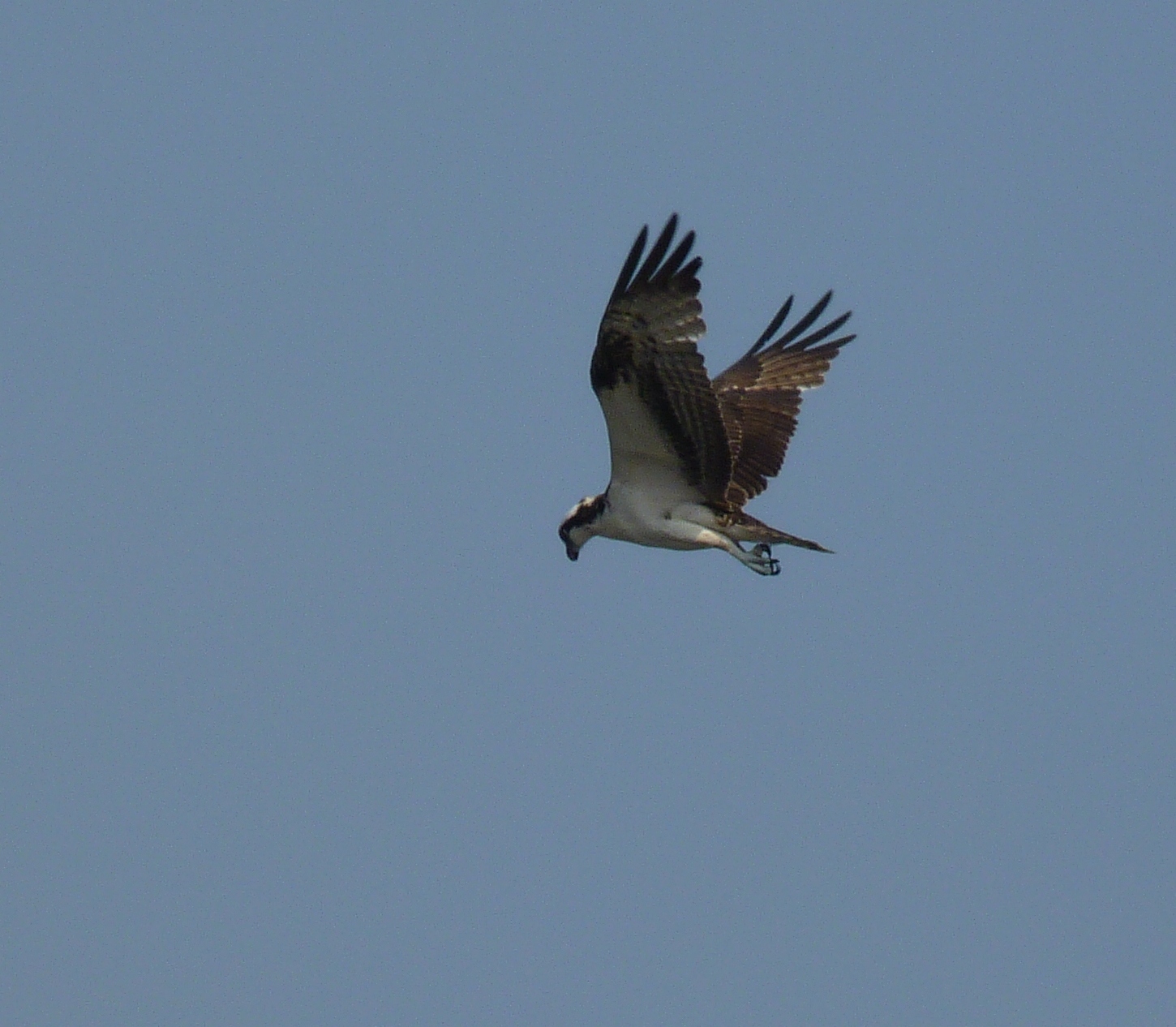
Close to the river at Tecolutla, there were a number of Ospreys. These magnificent birds could be wintering here, or early returning migrants. They hunt by hovering above the river and then plunging in to catch fish.


Ospreys, Tecolutla

I also caught up with American Kestrels, Common Black Hawks, a Grey Hawk, a male Northern Harrier, Red-tailed Hawk, and perhaps best of all, a superb adult Laughing Falcon near the El Tajin ruins.
BUBO Listing www.bubo.org